How to Defend Against AI-Speed Reconnaissance
Reduce direct application exposure while keeping access usable. Publish private resources, issue signed task grants, and verify the origin boundary.
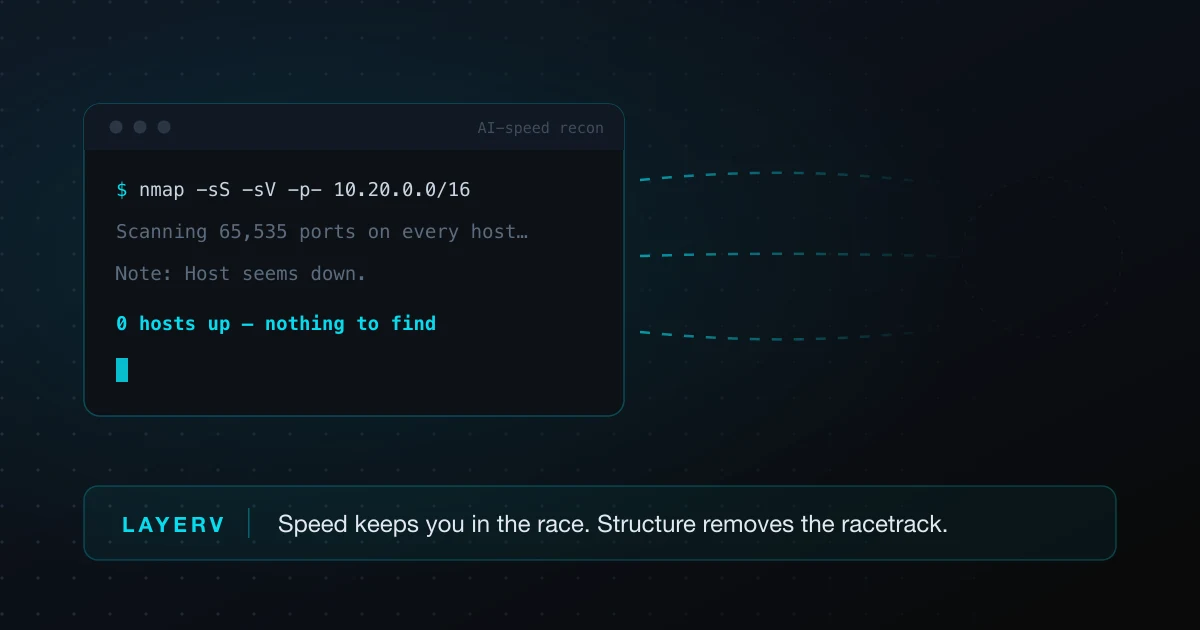
An internal service does not need a permanent public login page simply because a person or agent needs to use it. Keeping that origin private removes a direct source of application responses for unauthorized internet probes.
AI can help attackers correlate exposed services, public records, and known weaknesses. That makes reducing unnecessary exposure useful alongside patching and detection. It does not make every attacker infallible, and it does not make those other defenses obsolete.
Change What the Attacker Can Reach
A scanner learns from an application's responses: banners, login screens, error messages, and other behavior. A private origin gives an unauthenticated internet caller no direct application connection to probe.
Network hiding puts authorization before the protected origin connection. In LayerV, the resource has a Cryptographic Resource ID (CRID), and a qURL™ carries a separate signed access grant. The identifier names the resource; it does not grant access. The grant can be created for the task and checked before the origin connection opens.
This is more than assigning a public forwarding address to a local port. It gives builders a resource identity and access lifecycle that they can use from code. Outbound tunnels and other private-access systems can also protect origins; the distinction is the complete resource-and-grant workflow.
Cryptography makes guessing a valid grant impractical when keys and implementations are sound. It does not remove the risks of stolen links, compromised credentials, implementation flaws, or misuse by an authorized recipient. Public service endpoints and historical DNS records can still exist even when the origin is private.
Five Steps to Deploy It
1. Map your own exposure. Inventory the domains, addresses, load balancers, and other public paths that reach your applications. Test systems you own or are authorized to assess. Check configuration as well as scan results: one quiet scan is not evidence that every route is closed.
2. Choose what should be private. Start with an internal HTTP application, such as a dashboard or staging preview. Public websites have a different purpose. Confirm that your application's protocol and authentication work with the chosen access flow.
3. Publish from a private origin. Follow the CLI quickstart. Keep the app on loopback for that walkthrough and keep the publishing host running. Close any separate public path through the relevant firewall, load balancer, or service configuration. Changing DNS or registering a public URL does not do this for you.
4. Issue access for the task. Use qurl share <CRID> with the full CRID returned by publishing, or create links from your application code. Standard links are bearer credentials: send them privately and retain app sign-in when you need verified user identity. Configure link expiry and use limits; treat the resulting session's lifetime separately. Revoke access when the task no longer needs it.
5. Test both paths. Confirm that the intended recipient can use the app. Then confirm that an unauthenticated caller cannot bypass the access flow through an old public endpoint. Test link expiry, revocation, and application sign-in. A scan of a public LayerV endpoint is not a test of the private origin boundary.
Keep the Other Defenses
Origin isolation reduces direct internet exposure. It does not erase DNS history, hide a public marketing site, prevent every attack, or establish regulatory compliance. Keep patching, endpoint protection, application authorization, and incident response.
The practical shift is that private access no longer has to be a permanent destination. Publish a resource, issue a grant for the work, and withdraw it when the work ends. People and agents can use that same resource model without making the origin a public application endpoint.